
There is no such thing as a free lunch

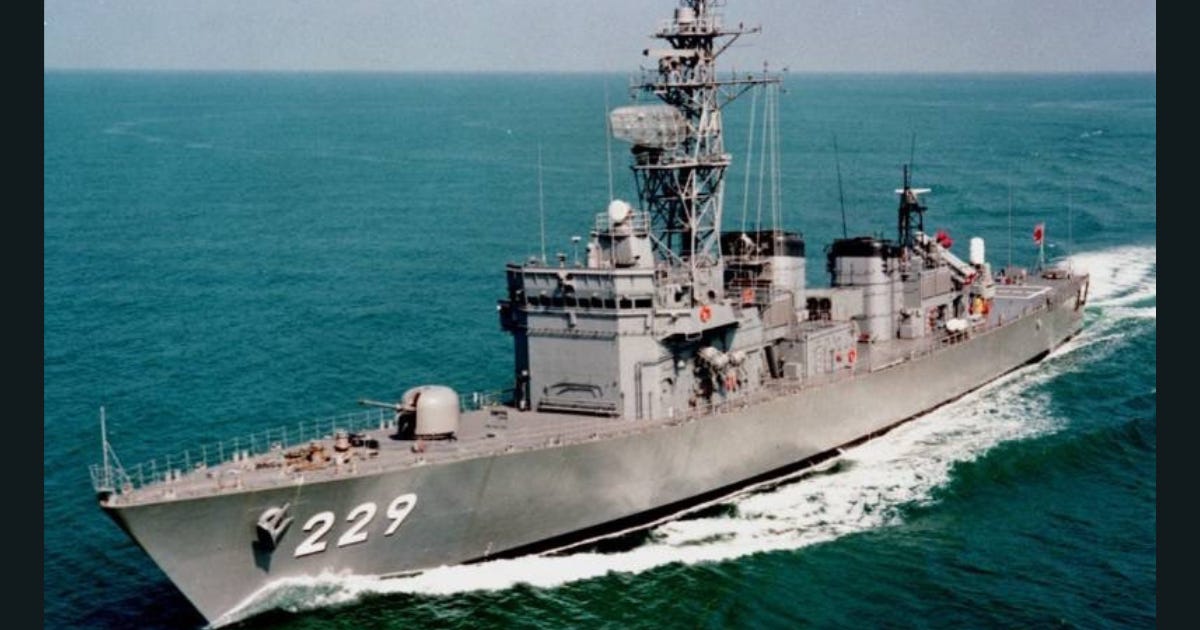
An Abukuma class Destroyer Escort. Photo from seaforces.org
By: Manuel Mogato | Published: July 15, 2025
Reading Time: 5 minutes
A Japanese newspaper had reported that Tokyo was ready to transfer to Manila all six Abukuma-class destroyer escorts and boost the Philippines Navy’s deterrence capability.
Built in 1989, Japan planned a total of 11 destroyer escorts, but only six vessels were completed. The five others were cancelled.
By 2019, these 109-meter-long warships, armed with Harpoon missiles and were used as anti-submarine and anti-surface vessels, were replaced by the Mogami-class stealth frigates.
At least eight frigates had been completed, hastening the phasing out of the Abukuma-class warships by 2027.
Why is Japan transferring these warships to the Philippines? Is there a quid pro quo? How much will it cost the Philippines?
Subscribe to the API Newsletter
Bite-sized updates sent straight to your inbox.
Success!
First Name
Last Name
By signing up, you agree to our User Agreement and Privacy Policy & Cookie Statement. This site is protected by reCAPTCHA and the Google Privacy Policy and Terms of Service apply.
Obviously, Tokyo will gain a lot of goodwill when it transfers the destroyer escorts to the Philippines, which is known to receive second-hand defense equipment from the United States, Australia, and South Korea.
Japan is also building an alliance with like-minded countries to counter an assertive China and long-time hostile states, like North Korea and Russia – two countries it had defeated in wars.
It had struck status of forces agreements with Australia, the Philippines, and the United Kingdom. It also had trilateral arrangements with the Philippines and the United States and with South Korea and the United States; and the QUAD alliance with Australia, India, and the United States.
In all these defense arrangements, the Philippines is the weakest in terms of deterrence capabilities.
Thus, it proposed to transfer vessels and aircraft to enhance its maritime domain awareness and create a minimum credible defense capability.
The Philippine Navy, in a statement, said it was premature to discuss the transfer because both countries are still discussing the terms of the deal, which may include the transfer of TC-90 surveillance aircraft.
It’s uncertain if all six vessels will be transferred. The Philippine Navy has yet to inspect the warships.
Based on Japanese media reports, Japan will export the second-hand vessels to the Philippines, meaning the transfer may not be free.
Japan may eventually donate the vessels, similar to the five Beechcraft TC-90 surveillance aircraft transferred during the Duterte administration.
The Philippines was supposed to lease the five aircraft, but they were later donated for free under Japanese laws. Tokyo also handed over a billion-peso worth of US-made UH-1H helicopter spare parts and air frames.
Even if Japan transfers the vessels without cost to the Philippines, it will still spend on the refurbishment because Japan will strip its combat management systems and missiles.
For instance, Japan will take out the Harpoon missile system and the anti-submarine warfare torpedoes because it is not allowed to export military systems beyond search and rescue, surveillance, and non-offensive roles.
Thus, the Philippines would still spend millions of dollars to install a combat management system, anti-submarine warfare armaments, and anti-ship missiles.
The Philippine Navy has been using the South Korea-made SSM-700K C-Star missiles on its new frigates.
Easily, the Philippines would probably spend $12 million for the missile systems.
The next big question is will the Philippines spend for the refurbishment? Where will it get the funds? Does the Philippine Navy have enough personnel and facilities for six second-hand vessels?
The Philippine Navy is the smallest service in the Armed Forces as past administrations prioritized the Army to fight New People’s Army rebels and Islamist militants in Mindanao.
Until recently, the Philippine Navy operated 80-year-old destroyer escorts, handed down from the United States after World War II and from South Vietnam in 1975 when it was overrun and defeated by North Vietnam.
Defense Secretary Gilberto Teodoro Jr. has been proposing to build drydocks for eight brand-new vessels it had acquired – two corvettes and six Offshore Patrol Vessels.
The defense department did not prepare to accept the six second-hand destroyer escorts from Japan.
There could be no funds, no facilities, and no personnel for the Abukuma-class vessels.
On second thought, these vessels could be stop-gap measures as the Philippine Navy modernizes its fleet.
The Japanese vessels were relatively newer than the three former US Coast Guard cutters, now known as del Pilar-class vessels; three former British
Royal Navy Peacock class, now known as Jacinto-class vessels and a former South Korean Pohang-class corvette, now known as BRP Conrado Yap.
The Philippine Navy needs more platforms as it needs to show more flags in the South China Sea and increase its maritime patrols in disputed waters.
It might also expand its roles after Japan proposed in March the “one-theater” concept when US Defense Secretary Pete Hegseth.
Japan wanted to deploy its self-defense maritime and air force in the South China Sea, not only in the East China Sea and waters around the Korean peninsula.
It also wanted the Philippines to join patrols in the East China Sea as part of the “one-theater concept” and trilateral arrangement with the United States.
Could the second-hand destroyer escorts designed to sail in temperate climates be part of the “one-theater concept”?
There is no such thing as a free lunch.
The post There is no such thing as a free lunch appeared first on asiapacificinsights.com.