
The price of doing business with Trump’s America

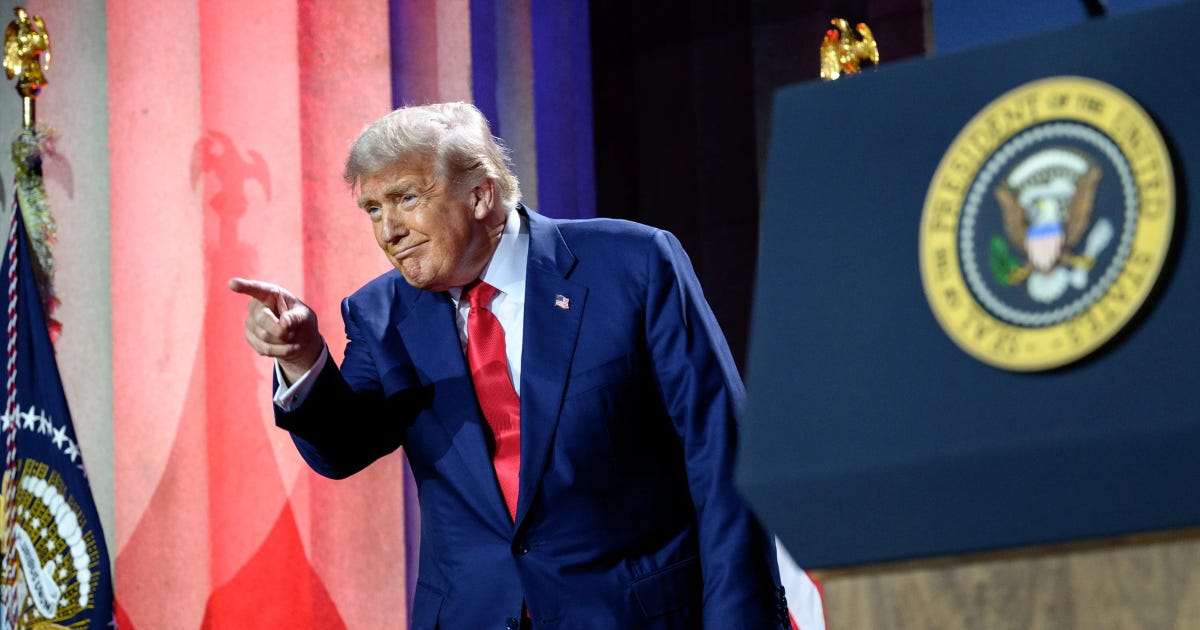
President Donald Trump at the White House AI Summit last July 23, 2025, held at Andrew W. Mellon Auditorium in Washington, D.C.Photo from The White House.
By: Rodney Jaleco | Published: July 30, 2025
Reading Time: 5 minutes
WASHINGTON D.C. — Over a week after their Oval Office meeting where Pres. Trump announced a 19 percent tariff on Philippine exports, and days before an arbitrary tariff deadline for the rest of the countries that still don’t have deals, there is growing consensus this was the price of doing business with Trump’s America.
It was the first meeting between Pres. Ferdinand Marcos Jr. and Mr. Trump – also the first with a Southeast Asian leader who also played a critical role in highlighting the threat from China and steering the Philippines back to the US axis after his predecessor’s “pivot to China” policy. (Also read: BBM meets the mogul: the hunt for a big, beautiful deal)
The two faced the media and as usual, Pres. Trump dominated the Q&A, praising Pres. Marcos then taking a swipe at former Pres. Rodrigo Duterte, now awaiting trial by the International Criminal Court in The Netherlands; and in between, boasted about the “major deal” that laid an obviously one-sided 19-to-0 tariff swap for goods coming in and from both countries.
The “deal” was roundly criticized back in Manila but the protestations felt relatively muted, almost perfunctory. Within days after the Marcos-Trump parley, Pres. Trump unveiled other “major deals” with Japan and the European Union in between swings at his new golf resort in Scotland. They too balked, whining they “were taken to the cleaners” by the “tough” trade.
But this is the new norm for doing business with the self-described guru of the “art of the deal” – there is nothing Pres. Trump values more than bragging rights and no one he appreciates more than people willing to go along with the charade.
Subscribe to the API Newsletter
Bite-sized updates sent straight to your inbox.
Success!
First Name
Last Name
By signing up, you agree to our User Agreement and Privacy Policy & Cookie Statement. This site is protected by reCAPTCHA and the Google Privacy Policy and Terms of Service apply.
The “deals” were nothing more than framework agreements forged to satisfy arbitrary deadlines that Pres. Trump himself set. They laid down basic conditions for individual contracts, many of which are still being negotiated.
But don’t say that to Pres. Trump lest you become another Zelensky, the Ukrainian leader who tried to argue with him in front of the press. Grab the “deal” then work on the real deal. That is what the Marcos economic team appears to be doing – as is the rest of America’s major trading partners. (Also read: Marcos secures 3 billion-peso aid from Washington)
The Philippines’ top export products to the US – semiconductors and electronics – are not covered by the 19% tariff because they are subject to a separate tariff schedule, one that has American national security implications. “Semiconductors are exempted not because of us, it’s because America chose to exempt…because they deemed it important to their supply chain, to their national security,” explained Frederick Go, special presidential assistant and Pres. Marcos’ chief tariffs negotiator.
More than half of Philippine exports to the US are semiconductors and electronic products, and which help explain the country’s nearly $5 billion trade surplus with the US. Economists believe the tariff impact on the Philippines will be “negligible”. “I would argue that this is a much bigger concern for the Americans rather than for Filipinos,” said University of the Philippines School of Economics professor Dr. J. C. Punongbayan.
The Philippine economy, they say, is essentially driven by domestic consumption, buoyed in part by foreign worker remittances. Still, Japan’s Nomura Global Markets Research estimate the tariffs could shave as much as 0.4 percentage points from Philippine GDP, though some say that could be compensated by other inflows from the country’s complicated relationship with the US.
Remittances from overseas Filipinos reached $15.34 billion in the first five months of 2025; the US traditionally accounts for half of total remittances because funds go through banks that are mostly situated in the US. A US proposal to tax remittances by non-residents could be more damaging than tariffs.
The Philippines continues to be the top beneficiary of US military assistance in the East Asia-Pacific region. The State Department, for instance, timed its announcement of $60 million in new funding for energy, maritime and economic projects while Pres. Marcos was in Washington last week. In March, the Trump administration restored $670 million in military aid (including $500 million that was committed under the Biden administration) that was initially held up in a worldwide review of US foreign assistance. (Also read: The Philippines: a new laboratory for US cutting-edge missiles and drones)
The State Department provided over $700 million in various economic, social, law enforcement, cultural assistance in 2024, although much of that has been halted with the shuttering of the US Agency for International Development (USAID).
Nearly 80 percent of Philippine aid went to economic projects prior to Pres. Trump’s 2nd term but that’s now shifted to defense and security, specifically the threat from China. The US has stepped-up joint training exercises and maritime patrols with the Philippine military, especially in the northern Philippines that’s seen as crucial if China invades Taiwan, and vowed to deploy more advanced missiles and drones.
After his meeting in the White House, Pres. Marcos was asked if the Philippines got the short end of the tariff deal, “That’s part of negotiations,” he responded rather sheepishly, but it was also an acknowledgement that with the stakes so high to keep America on our side, that was the price of continued business with Pres. Trump and his administration.
The post The price of doing business with Trump’s America appeared first on asiapacificinsights.com.