
India’s 2026 diplomatic blitz: EU leaders, Gulf, Quad Summit signal global realignment

By: Pirzada Shakir | Published:January 25, 2025
Reading Time: 6 minutes
New Delhi — India is set for a dense calendar of high-profile foreign visits in 2026, with early engagements led by the European Union’s top leadership and an expected Quad leaders’ summit later in the year.
These visits will test New Delhi’s ability to leverage its convening power to balance ties with the West, key regional partners and the Global South, while advancing trade, technology and security agendas.
Republic Day diplomacy: EU leaders in New Delhi
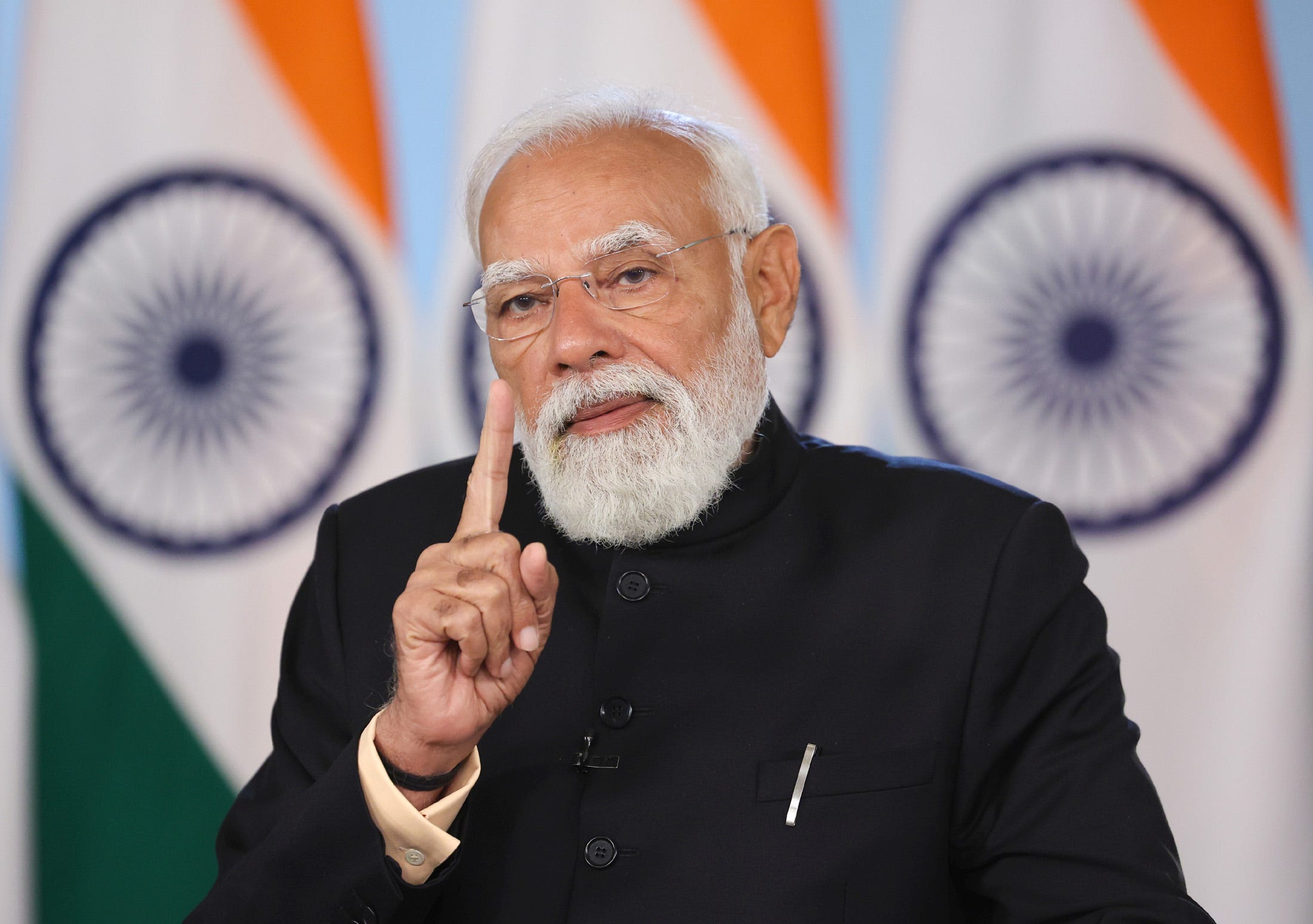
The most concrete early 2026 engagement is the state visit of European Council President António Costa and European Commission President Ursula von der Leyen from January 25–27, when they will serve as joint chief guests at India’s 77th Republic Day celebrations. The will also co-chair the 16th India–EU Summit in New Delhi alongside Prime Minister Narendra Modi.
Confirming the visit during the World Economic Forum in Davos, European Commission President Ursula von der Leyen said, “I will travel to India. There is still work to do, but we are on the cusp of a historic trade agreement, what some call the mother of all deals, one that would create a market of two billion people, accounting for almost a quarter of global GDP.”
She added, “crucially, it would give Europe a first-mover advantage with one of the world’s fastest-growing and most dynamic regions.”
For New Delhi, hosting the EU’s top leadership together signals an effort to consolidate Europe as a strategic pillar in its diversification away from over-dependence on any single partner, including Russia and China.
Subscribe to the API Newsletter
Bite-sized updates sent straight to your inbox.
Success!
First Name
Last Name
By signing up, you agree to our User Agreement and Privacy Policy & Cookie Statement. This site is protected by reCAPTCHA and the Google Privacy Policy and Terms of Service apply.
Harsh V Pant, Vice President for Studies and Foreign Policy at the Observer Research Foundation, said the scale and timing of such engagements underline India’s rising weight in global diplomacy. (Also read: India, China pursue ‘strategic autonomy’ as Trump tariffs force global realignment)
“The intensity of India’s foreign engagement and these visits tell us that India is seen as an important interlocutor in global politics and a credible partner at a time when countries like the US are challenging the fundamentals of the global order,” Pant said. “Countries are looking for trusted partnerships, and India is seen as a trusted partner by many” he added.
For Brussels, the visit is an opportunity to anchor India more firmly within a rules-based trade and technology framework at a time of growing strains with both Washington and Beijing.
Pant said the choice of EU leaders as Republic Day guests sends calibrated signals across major capitals.
“As far as Europe is concerned, it sends a message that Europe and India are building their partnership based on common interests. Both want to preserve their strategic autonomy and carve out a more stable international order.
India–EU trade, tech and security push The India–EU Summit around India’s Republic Day is expected to centre on the long-pending Free Trade Agreement, with both sides aiming to push negotiations into a decisive phase. Parallel talks on an investment protection pact and a Geographical Indications agreement are also likely.
Beyond trade, the leaders are expected to deepen cooperation on green technologies, digital public infrastructure, critical minerals and resilient supply chains, building on momentum from the EU College of Commissioners’ visit to India in early 2025.
Security and defence-industrial ties, including joint R&D, maritime domain awareness and potential co-production, are also set to feature against the backdrop of a more contested Indo-Pacific.
Quad summit: timing, signals and stakes
A potential Quad leaders’ summit in India gathers momentum, with timing pegged for the first quarter of 2026 amid rising Indo-Pacific tensions.
A 2025 joint India-US statement highlighted Prime Minister Narendra Modi’s intent to host the gathering, though exact dates and format remain under diplomatic deliberation. Australian Prime Minister Anthony Albanese expressed optimism for a first-quarter meet, aligning with New Delhi’s push to steer discussions.
If held in New Delhi, the summit would allow India to highlight its central role in Indo-Pacific security deliberations amid China’s growing maritime assertiveness and continued pressure along the Line of Actual Control.
Robinder Sachdev, international relations expert and president of Imagindia think tank said the broader geopolitical churn has made India a “focal point” for recalibrating partnerships.
“We are living in a phase where a new world matrix is under construction,” Sachdev said. “The world is rebooting after COVID, the Russia-Ukraine war and the Israel-Gaza conflict, and in this phase countries are urgently looking to cement or redefine their partnerships.”
Sachdev said that a Quad summit in India would be closely watched for signals on the grouping’s future direction.
“The Quad summit is contingent on how the US positions itself, including whether President Trump attends and how India–US trade negotiations progress. If it does take place, it would be a positive signal for the Quad partnership and would reassure many countries in the region that want a sustained American presence in the Indo-Pacific,” Sachdev explained. (Also read: India’s tightrope: Balancing BRICS ambitions amid rising US tariff threats)
Gulf and AI diplomacy
India hosted UAE President Sheikh Mohamed bin Zayed Al Nahyan earlier this week, capping a flurry of high-level Gulf engagements as New Delhi prioritises energy security, tech sovereignty, and strategic hedging in West Asia.
The visit produced key outcomes, including a MoU on AI collaboration for India’s AI Impact Summit scheduled for February 2026 in New Delhi. The two nations also committed $10 billion in joint investments for semiconductors and green hydrogen projects.
UAE also pledged for priority LNG supplies and defence co-production of BrahMos missile variants. These deals bolster supply-chain resilience amid global volatility.
The outreach signals India’s intent to bridge Gulf resource wealth with Global South tech ambitions, countering China’s AI influence while reinforcing non-alignment. German Chancellor Friedrich Merz was also in India on January 12-13.
He met India’s Prime Minister and had tech engagements in Bengaluru, widely known as the “Silicon Valley of India.” Accompanied by 23 CEOs, Merz’s visit yielded 19 agreements on defence, trade, green tech, and skilled migration.
India’s 2026 calendar is not just about who lands in New Delhi, but about how these visits position the country within an increasingly fragmented global order in which middle powers are claiming greater strategic space.
The post India’s 2026 diplomatic blitz: EU leaders, Gulf, Quad Summit signal global realignment appeared first on asiapacificinsights.com.