
Nepal’s political crisis and geopolitical chessboard – India, China, and the struggle for influence

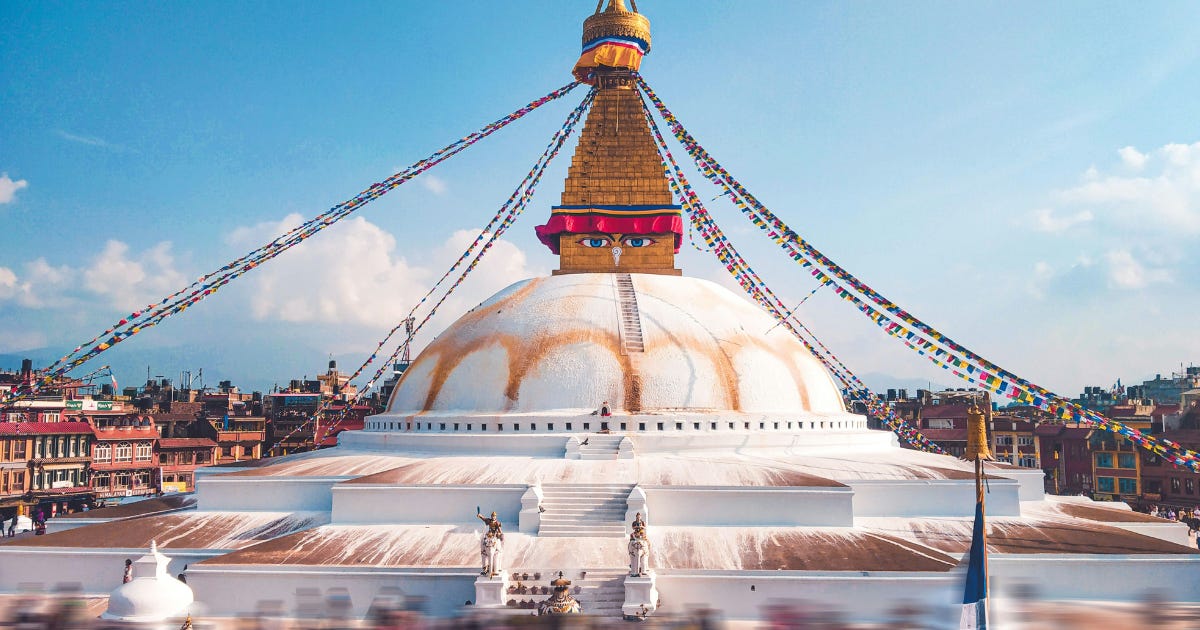
The Boudah Stupa in Kathmandu, Nepal. Photo by Meghraj Neupane on Unsplash.
By: Pirzada Shakir | Published: September 23, 2025
Reading Time: 7 minutes
New Delhi – Nepal’s recent political turmoil, sparked by the unexpected resignation of Prime Minister KP Sharma Oli following widespread student protests, has sent shockwaves throughout South Asia. The crisis not only exposed the fragility of Nepal’s democracy but also has significant implications for its two powerful nuclear-armed neighbors — India and China.
Both regional powers have vested interests in the stability and foreign policy of the small Himalayan nation. The protests, led predominantly by Nepal’s Gen Z population, erupted over grievances such as widespread corruption, economic stagnation, and ban on social media.
Nepal’s government on September 4 implemented a ban on 26 social media platforms including Facebook, Instagram, WhatsApp, YouTube, and X (formerly Twitter) due to their “failure to register” with the Ministry of Communications and Information Technology.
Oli’s government claimed the registration was a necessary regulatory step to address concerns about “misinformation, hate speech, cybercrime, and fake accounts.”
The public dissent culminated in violent clashes and the historic ousting of one of Nepal’s most enduring political figures. Oli’s resignation marked a significant domestic shift, but it also reverberated across the region.
Amid Nepal’s uncertain political future, the development has compelled India and China to reassess their policies and influence strategies in the Himalayan nation.
Subscribe to the API Newsletter
Bite-sized updates sent straight to your inbox.
Success!
First Name
Last Name
By signing up, you agree to our User Agreement and Privacy Policy & Cookie Statement. This site is protected by reCAPTCHA and the Google Privacy Policy and Terms of Service apply.
The resignation followed weeks of intense demonstrations, during which young protesters called for an overhaul of Nepal’s political system and for greater transparency and opportunities. Nepal’s Health Ministry on Monday said that at least 72 people died in the anti-government protests. Many interpreted the protests as a generational clash against the entrenched elites, the so-called “nepo kids, ”whom they accuse of perpetuating inequality and privilege.
Kamal Dev, Kathmandu-based journalist and foreign policy expert while explaining the rise of the protests said, ”Gen Z demanded an end to the social media ban and a crackdown on endemic corruption.”
He said that there was broad consensus among the youth “that decisive action must be taken against corruption and that the current leadership should step down.”
Dev highlighted that the movement has triggered “a deep constitutional crisis, as there is no clear mechanism to appoint a new prime minister in line with the protesters’ demands.”
With Parliament now dissolved, “the country is facing a legislative vacuum. If elections are not held within the next six months, a deeper political crisis appears inevitable,” Dev said.
“The most realistic goal at this point would be to preserve the constitution over the next six months and successfully hold elections. Achieving this would be a major accomplishment under the current circumstances.”
The fall of Oli’s government is far from an isolated event. In just the last five years, South Asia has seen regime after regime toppled by street protests. From Sri Lanka to Pakistan and Bangladesh, a growing pattern of generational unrest has emerged, signalling that the region’s old order is unravelling.
The crisis exposes deeper challenges Nepal’s democracy is facing, including fragile institutions, economic challenges, and the demands of a rapidly changing demographic. Dev said Nepal’s democratic institutions are “already fragile due to excessive political interference”, which has “compromised” their independence and in current circumstances, “the executive is likely to exert increased pressure on remaining democratic institutions.”
In addition to domestic pressures, experts highlight Nepal’s strategic challenges amid great power rivalry. Nilanthi Samaranayake, Adjunct Fellow at the East-West Center in Washington said that Nepal will need “continued assistance from the international community and bilateral partners like the US to minimize the obstacles that could disrupt its economic growth due to the political crisis.”
The recent development in Kathmandu has sparked questions about whether Nepal can transition towards more accountable governance or risk enduring cycles of instability.
Nepal’s instability has caught the attention of regional powers who view the Himalayan nation both as a strategic buffer and a potential pivot between competing influences.
New Delhi, historically Nepal’s closest ally and economic lifeline, watches the developments with concern. The open border and deep socio-economic ties mean political instability in Nepal may translate quickly into security anxieties within India, especially in the sensitive northern states.
To mention, India’s relations with Nepal under Oli were marked by tensions, fuelled by border disputes, nationalist rhetoric, and Kathmandu’s tilt towards Beijing. India now faces the critical task of rebuilding trust with Nepal’s youth and new political actors without appearing interventionist.
Anil Trigunyat, former Indian Ambassador and foreign policy expert, said that India, in his view, hopes for “stability both political and economic in Nepal and all other neighbours, which are absolutely essential for the overall security of the region.”
Trigunyat, who has represented India in high stake nations further stresses that people-to people connect especially with and between the youth of the two countries [India and Nepal] is a “prerequisite for the public diplomacy and must be employed with a robust communication strategy and developmental packages.”
He also stressed that India will have to up the ante and “engage with the new government [in Nepal] at the earliest and take the collaborative dynamic forward as there are other major regional and external powers and players trying to engage and destabilise the regional countries.”
China, which expanded its footprint in Nepal through infrastructure investments and the Belt and Road Initiative, has responded cautiously. Emphasizing non-interference, Beijing has called for “stability and dialogue” while quietly seeking to maintain its projects and influence in the country.
Oli’s exit reduces Beijing’s immediate leverage but does not alter its long-term ambitions in Nepal. Analysts suggested that China’s strategy will likely focus on building relationships with emerging political players and shielding its investments from turbulence, even as it monitors India’s moves closely.
Samaranayake explained “Nepal’s agency is generally limited as a Smaller South Asian country when facing India-China rivalry and India’s regional dominance in capabilities.”
She said that “Nepal’s political transition offers the prospect of a new approach to managing its domestic development and foreign affairs.” As per Samaranayake Nepal has learned from the transitions of Sri Lanka in 2022 and Bangladesh last year. She emphasized that “its neighbors will be watching to see what Nepal can accomplish in a challenging environment of strategic competition.”
International observers stressed that Nepal’s stability is vital not just for the country but as a bellwether for South Asia’s future. As Nepal navigates this turbulent period, 73-year-old Sushila Karki, former chief justice of the country, on Friday took the oath as Nepal’s interim Prime Minister.
India welcomed the formation of a new Interim Government in Nepal, hoping that this would help in “fostering peace and stability.”
The Ministry of External Affairs said that India will continue to work “closely with Nepal for the well-being and prosperity of our two peoples and countries.”
China also issued a statement congratulating Karki while expressing a commitment to further bilateral relations.
The statement said that China and Nepal share a “time-honored friendship” It further stated, “we stand ready to work with Nepal to promote the Five Principles of Peaceful Coexistence, enhance exchanges and cooperation in various fields, and further advance bilateral relations.”
The decisions of Nepal’s new government won’t just be about domestic policy; they will echo far beyond its borders. They will shape the delicate balance of power and stability in one of Asia’s most strategically important regions.
For both India and China, Nepal is a central piece on the geopolitical chessboard. It presents an opportunity to expand influence and a challenge to manage the other’s rising power. In this contested space, Nepal’s choices will likely shape the future of regional diplomacy.
This crisis, while rooted in local demands for change, highlights a broader story of shifting power dynamics and generational transition sweeping South Asia. It will be closely watched by policymakers and analysts worldwide.
The post Nepal’s political crisis and geopolitical chessboard – India, China, and the struggle for influence appeared first on asiapacificinsights.com.